
Independent insights on packaging materials, printing, sustainable packaging and design
Packaging procurement often begins with a simple question: how much will each bag cost?
The answer is rarely as straightforward as a unit price. Materials, printing methods, order quantities and delivery arrangements all influence the final expense. Two suppliers may offer similar quotations, yet the quality of their finished products and their ability to deliver on time can be very different.
Quality adds another layer of complexity. An approved sample may look exactly as expected, but certain problems only become apparent during production. A metallic finish might not adhere properly to the chosen material, or an incorrect ink selection might produce an unexpected color difference.
Delivery can be equally unpredictable. Manufacturing may finish within the quoted lead time, while shipping and other arrangements add several weeks before the customer receives the packaging.
A good packaging procurement strategy considers these factors together. It helps buyers understand total costs, evaluate production quality and identify supply risks before they affect the business.
Drawing on actual packaging orders and manufacturing experiences, this article explores what procurement teams should look for beyond the initial quotation.
Before comparing quotations, buyers need a clear understanding of what they are purchasing.
For flexible packaging, this usually includes the bag format, dimensions, material structure, printing requirements, order quantity and delivery destination. Functional details such as zippers, degassing valves and barrier properties also affect the specification.
Consider two custom packaging projects using kraft-paper-based structures with a VMPET layer. One involves flat bottom pouches, while the other uses larger side gusset bags.
Although both products use similar material categories, their dimensions, constructions and order volumes differ. Their unit prices therefore cannot be compared directly.
Even when two suppliers quote the same bag size, other details may vary. One quotation might include sampling and transportation, while another lists those charges separately. Different material thicknesses, barrier structures or printing specifications can also affect the final price.
A useful request for quotation (RFQ) should establish the essential details:
Once these requirements are clear, buyers can evaluate competing offers on a more consistent basis.
For an overview of available structures, materials and finishes, explore Holden Pak's Custom Packaging Solutions.
Unit price is often the most visible part of a packaging quotation, but it is only one component of procurement cost.
Custom packaging may involve additional charges for printing plates, samples, design adjustments and transportation. Inventory also comes with costs, particularly when a brand purchases more packaging than it expects to use in the near future.
A practical approach is to consider the Total Cost of Ownership (TCO): the cost of purchasing packaging together with the relevant expenses associated with obtaining, storing and using it.
The following table outlines the main factors buyers should consider.
A simplified calculation is:
Total Procurement Cost = Packaging Purchase Cost + Additional Acquisition Costs + Relevant Operating Costs
Buyers can then divide this total by the number of usable packaging units to estimate the effective cost per usable bag.
This calculation becomes especially helpful when comparing suppliers with different setup charges, production methods or delivery arrangements.
Minimum order quantity (MOQ) is another important consideration.
Larger orders can reduce the cost per unit because certain production expenses are distributed across more packaging. However, higher quantities can also increase storage requirements, tie up working capital and leave brands with unused packaging if demand changes.
For a coffee roaster offering seasonal blends, for example, ordering a large quantity of printed bags may reduce the initial unit cost but create an inventory problem if the product is discontinued or its design changes.
Buyers should also establish whether MOQ applies to individual designs or can be combined across several SKUs. The answer depends on the printing method and production setup.
The following interactive model illustrates how fixed production costs may affect unit costs at different order volumes.
The curve illustrates an important point: ordering more packaging can reduce the unit cost associated with fixed production expenses, but the benefit becomes smaller as volume increases.
Real quotations do not always follow a smooth curve. Printing processes, raw material minimums and production requirements may create different price thresholds.
For a broader explanation of these factors, see How Packaging Pricing Works.
Packaging samples are essential for assessing materials, construction and appearance before mass production. However, buyers also need to understand how suppliers maintain quality after approval.
Printing color consistency and seal strength are two important aspects of flexible packaging manufacturing.
Color consistency helps protect a brand's visual identity across different production runs. Seal strength contributes to package integrity during filling, handling and transportation.
In one packaging order, an incorrect printing ink was selected, resulting in a visible color discrepancy.
The customer had not reported a problem. The production team identified the difference through its own observations and took corrective action to address it.
The case highlights the value of proactive quality control. A supplier's responsibility extends beyond responding to complaints. It also includes recognizing production issues before they reach the customer.
Buyers should ask how colors are checked, what references are used during printing and how nonconforming products are handled.
For more information about manufacturing and inspection, explore Inside Our Factory.
A different custom packaging project encountered a problem during hot stamping.
The selected metallic foil did not adhere completely to the pouch material, preventing the intended finish from being reproduced consistently.
Once the issue was identified, the production team immediately stopped the hot stamping process and began investigating.
Rather than continuing with the original foil, the team tested alternatives with different color codes. Each option was evaluated for compatibility with the packaging material, and unsuccessful options were eliminated.
After several trials, the team identified another foil that adhered successfully. Its color was also very close to the metallic shade originally selected by the customer.
The team then informed the customer about the proposed material adjustment and the small difference in appearance.
This experience illustrates why material compatibility deserves attention, particularly when packaging involves special finishes.
A design may look correct in a digital proof, but the intended surface effect still needs to work under actual production conditions.
For procurement teams, the value of this case lies in the supplier's response: stopping the affected process, testing alternatives and communicating a practical solution.
These are important capabilities to assess when selecting a packaging manufacturer.
Preparing artwork correctly can also reduce avoidable production problems. Our Artwork Preparation Guide covers dielines, colors, print files and special finishing layers.
Packaging procurement is also about protecting the appearance and identity of the brand.
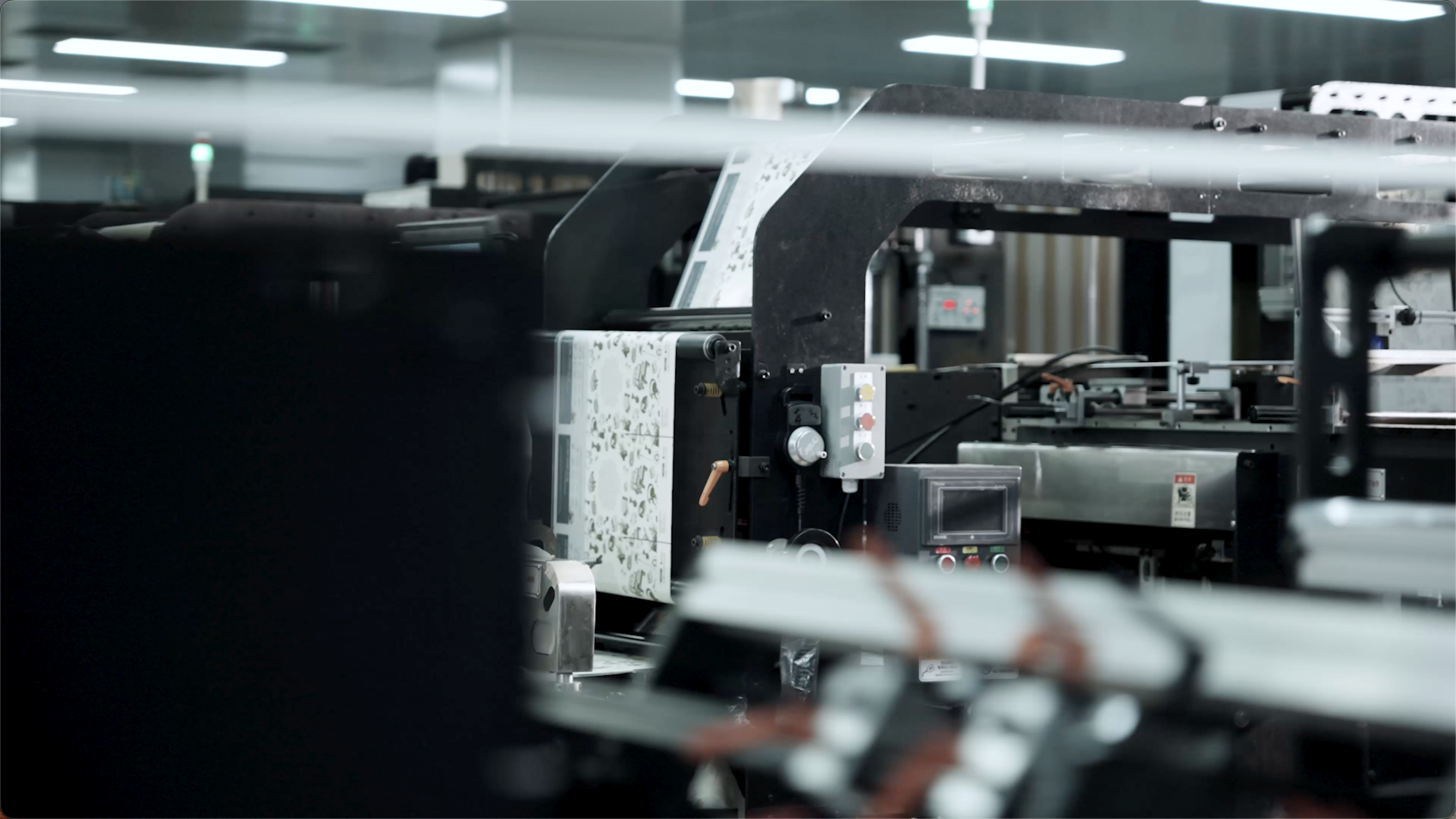
Rotogravure, flexographic and digital printing each have different production characteristics, and their suitability depends on the artwork, materials, order quantity and available equipment.
In some actual projects, customers have moved from a comparatively economical rotogravure option to a higher-cost flexographic or digital solution because it produced a result better suited to their particular design.
This does not mean that one printing method is universally superior. Rotogravure can deliver excellent color consistency and fine detail, while modern flexographic and digital systems offer their own strengths.
The decision depends on the specific artwork and production requirements.
For brands with detailed illustrations, distinctive colors or frequent design changes, the final visual result and production flexibility may matter more than achieving the lowest possible unit price.
Our article on Digital vs. Rotogravure Printing for Coffee Bags explores the differences in order quantities, setup requirements, cost and printing characteristics.
Some brands invest heavily in the appearance and tactile qualities of their packaging.
They may specify several special finishing processes to achieve a particular design style, even when those choices increase production waste, manufacturing complexity and unit cost.
Metallic foil, embossing, specialized coatings and other decorative finishes may require additional setup and closer quality control.
For buyers, the important question is whether these processes contribute meaningfully to the intended brand experience.
Special finishes can be worthwhile when they create a distinctive result that standard printing cannot achieve in the same way.
However, procurement teams should verify material compatibility, review physical samples and understand the additional production requirements before approving complex finishes.
The goal is to invest in processes that serve the design while keeping cost and manufacturing risk under control.
A packaging supplier may quote a production period of several weeks. That period does not necessarily indicate when the customer will receive the finished bags.
Artwork approval, order confirmation, payment arrangements, manufacturing, freight booking and transportation all contribute to the complete schedule.
A real packaging order completed in 2026 provides a useful example.
The following dates come from one completed custom packaging order.
Manufacturing was completed 35 calendar days after the order was confirmed and the deposit was received.
However, the customer received the finished packaging 79 days after order confirmation. From the initial inquiry to final receipt, the complete period was 110 days.
The difference matters.
The first 31 days were spent before the confirmed order. Another 15 days passed between manufacturing completion and vessel departure, including the final payment and booking milestones. The last 29 days covered the period from vessel departure until the customer received the shipment.
The final period should not be interpreted as sea transit time alone, since other delivery activities may be included.
This example represents a single completed order, rather than an industry average or a guaranteed delivery schedule.
Nevertheless, it shows why procurement teams need to plan beyond production.
For brands preparing a product launch or replenishing inventory, the most practical approach is to work backward from the required delivery date. Allow time for artwork approval, commercial arrangements, manufacturing and international transportation.
Buyers should also clarify when a supplier's quoted production lead time begins. It may be linked to final proof approval, payment or another agreed milestone.
For a breakdown of the full ordering process, see How We Work.
Supply risks cannot always be avoided.
Material shortages, changes in shipping schedules and last-minute order revisions can affect a project even after its production plan has been confirmed.
The supplier's response becomes particularly important in these situations.
When raw materials are delayed, early communication allows the buyer to review available inventory and adjust purchasing plans.
In our experience, customers are informed when a material delay is likely to affect the expected delivery date.
The aim is to provide useful information while there is still time to consider practical alternatives.
A procurement team should understand how suppliers monitor material availability and when they communicate potential changes to production schedules.
International freight introduces another source of uncertainty.
When sea freight is delayed, we work with freight forwarders to understand the situation and discuss available remedies.
Depending on the circumstances and agreed responsibilities, an appropriate compensation arrangement may also be negotiated with the customer.
Such arrangements depend on the specific order and should not be assumed to apply automatically.
Buyers should confirm the relevant delivery terms, responsibilities and communication procedures before placing an order.
Unexpected changes can also originate from the customer.
A buyer may request artwork revisions after approval or increase the order quantity once production arrangements are underway.
These changes may involve additional materials, preparation work, printing setup or manufacturing time.
Under the agreed commercial terms, the resulting expenses generally need to be borne by the customer. In practice, buyers and suppliers can discuss the options and agree on a reasonable way forward.
Clear change-control procedures help both parties understand what can be adjusted, how much it will cost and whether the original delivery schedule can still be maintained.
A structured supplier evaluation can make procurement decisions easier to compare and explain.
Instead of focusing on one quotation, buyers can assess the total cost, product quality, delivery reliability and the supplier's ability to manage unexpected problems.
The following interactive scorecard uses an illustrative weighting system.
Each supplier is rated from 1 to 5 in four categories. The final result is calculated as a weighted score out of 100.
This framework is intended to support comparison rather than replace technical judgment.
For example, a brand preparing for a fixed launch date may assign greater weight to delivery reliability. A product with demanding visual requirements may place more emphasis on print quality.
Essential compliance and safety requirements should be checked before scoring. A supplier that cannot meet mandatory requirements should not qualify simply because it offers a lower price.
Buyers should also ask for evidence of relevant certifications, testing and quality management procedures. Information about Holden Pak's available documentation can be found on our Certifications page.
A well-managed packaging order begins with clear expectations.
In actual procurement conversations, customers frequently ask about MOQ, production schedules, artwork support, samples, shipping expenses and certification documents.
They also want to understand what happens if a product develops a quality issue or an unexpected change affects production.
The following checklist brings these questions together.
It can also be useful to meet potential suppliers at trade shows or arrange technical discussions before committing to a significant order.
The more clearly buyers and suppliers understand the project at the beginning, the easier it becomes to manage costs, production and delivery.
Additional resources are available through Holden Pak's Guide & Download Center.
Packaging suppliers should be compared using consistent specifications and a combination of cost, quality, delivery reliability and risk management criteria. Buyers should review samples, relevant documentation and actual production capabilities rather than relying only on quotations.
Unit price represents the quoted cost of each packaging unit. Total procurement cost also considers applicable expenses such as tooling, sampling, freight, inventory and quality-related losses.
Larger orders may reduce the unit cost by spreading fixed production expenses across more units. However, they can also increase inventory and storage costs. The best quantity depends on demand, production requirements and the likelihood of future design changes.
Buyers should review material specifications, physical samples, print consistency, seal performance and quality inspection procedures. They should also understand how the supplier identifies and corrects production problems.
The complete procurement schedule includes activities beyond manufacturing, such as order approval, payment, freight booking, international shipping and final delivery. These stages should be considered separately when planning purchases.
Yes. A higher-cost printing method or special finish may be appropriate when it delivers a visual or functional result that better meets the product's requirements. The decision should be based on actual artwork, samples and production conditions.
Good packaging procurement is about understanding what the business needs its packaging to achieve, not simply finding the lowest quotation.
Material choices influence both cost and performance. Printing and finishing methods affect how the brand is represented. Production quality depends on consistent checks and the ability to respond when something goes wrong.
Delivery requires the same attention. As the completed order timeline illustrates, the time between placing an order and receiving the packaging can be considerably longer than the manufacturing period alone.
For procurement teams, the strongest decisions come from evaluating these factors together. Clear specifications, realistic schedules, transparent communication and evidence of supplier performance create a more dependable foundation for purchasing.
If you are planning a custom packaging project, contact Holden Pak to discuss material options, printing requirements, order quantities and delivery arrangements.
We’ll reply within one business day to confirm the details and help with your quote.